
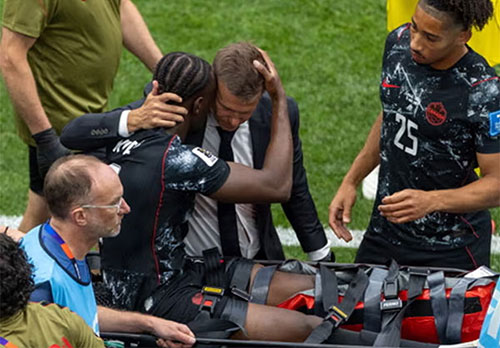
 The 2026 FIFA World Cup delivered one of its most heartbreaking moments when Canadian midfielder Ismaël Koné suffered a severe left leg injury during Canada’s Group B match against Qatar in Vancouver. What had been a historic night for the Canadian national team quickly turned somber as Koné was stretchered from the field after sustaining fractures to both his tibia and fibula.
While Canada’s 6-0 victory secured its first-ever FIFA World Cup win, the loss of one of its most dynamic midfielders cast a shadow over the celebration. Medical evaluations later confirmed that Koné suffered fractures of both the tibia and fibula in his lower left leg, requiring surgery and ending his World Cup campaign.
What Happened to Ismaël Koné?
The injury occurred during the second half of Canada’s match against Qatar at BC Place Stadium in Vancouver. Following a challenge from Qatar midfielder Assim Madibo, Koné immediately went to the ground in obvious distress. Medical personnel rushed onto the field, and the severity of the injury became apparent almost immediately. The challenge ultimately resulted in a red card after review.
Witnesses, teammates, and coaches described the injury as one of the most serious seen during the tournament, with Koné later undergoing surgery to repair the fractures.
What Is a Tibia and Fibula Fracture?
The lower leg consists of two bones:
Tibia (Shin Bone): The tibia is the larger and stronger of the two bones. It bears the majority of the body’s weight during standing, walking, running, and athletic activity.
Fibula: The fibula is the smaller bone located on the outside of the lower leg. While it carries less weight, it plays a crucial role in ankle stability and muscle attachment.
A combined tibia and fibula fracture is often considered a severe orthopedic injury because it affects both the structural stability of the leg and the patient’s ability to bear weight. These injuries frequently require surgical intervention and extensive rehabilitation before athletes can safely return to competition.
How Do Tibia and Fibula Fractures Occur in Soccer?
Soccer players are particularly vulnerable to lower extremity injuries due to the high-speed nature of the sport. Research examining severe lower-leg fractures in soccer players has found that slide tackles account for approximately 42% of these injuries, making them the most common mechanism. Goalkeeper-related incidents account for roughly 26%, while two-player collisions during loose-ball situations contribute approximately 23% of cases. Standing opponent kicks account for another 10%.
Common mechanisms include:
- Direct contact or tackles
- Twisting injuries
- High-impact collisions
- Landing awkwardly after jumps
- Sudden changes in direction
In elite competition such as the FIFA World Cup, players routinely sprint, cut, pivot, and absorb significant physical contact, increasing the risk of traumatic injuries.
Interestingly, studies have shown that shin guards do not reliably prevent tibia and fibula fractures, highlighting the tremendous forces involved when these injuries occur. While shin guards are effective at reducing minor injuries and contusions, they cannot always protect against the high-energy trauma associated with severe fractures.
Symptoms of a Severe Lower Leg Fracture
A fractured tibia and fibula often causes:
- Immediate, intense pain
- Inability to bear weight
- Visible deformity of the leg
- Significant swelling
- Bruising
- Instability of the lower extremity
Athletes frequently require emergency stabilization before being transported for advanced imaging and surgical evaluation.
Treatment for Tibia and Fibula Fractures
Treatment depends on the severity and location of the fracture. In high-level athletes, surgery is often necessary to restore alignment and stability.
Intramedullary Nailing
A metal rod is inserted into the tibia to stabilize the fracture while it heals.
Plate and Screw Fixation
Orthopedic surgeons may use plates and screws to hold the fractured bones in proper alignment.
Post-Surgical Rehabilitation
Following surgery, patients undergo a structured rehabilitation program that may include:
- Range-of-motion exercises
- Progressive weight-bearing
- Strength training
- Balance and proprioception training
- Sport-specific rehabilitation
Physical therapy plays a critical role in helping athletes safely return to competition.
How Long Is Recovery?
Recovery timelines vary depending on:
- Fracture severity
- Whether surgery is required
- Bone healing rates
- Associated soft tissue injuries
- Rehabilitation progress
For professional athletes, recovery from a surgically repaired tibia and fibula fracture can often take six months to over a year before returning to full competition. Research involving elite soccer players found that the average return-to-play timeline following a tibia and fibula fracture is approximately 40 weeks.
While many athletes successfully resume their careers, recovery is not always straightforward. Studies have reported major complications in approximately 39% of cases, with complication rates approaching 50% among athletes who sustain combined tibia and fibula fractures. Potential complications may include delayed healing, nonunion, infection, chronic pain, or the need for additional surgical procedures.
Every case is unique, and returning too soon can increase the risk of reinjury or delayed recovery.
The Importance of Orthopedic and Sports Medicine Care
Severe sports injuries require prompt diagnosis and specialized treatment. Orthopedic surgeons, sports medicine physicians, and physical therapists work together to guide athletes through every stage of recovery, from injury diagnosis to return-to-play testing.
At Nirschl Orthopaedic Center and Virginia Sportsmedicine Institute, our team specializes in the diagnosis, treatment, and rehabilitation of sports-related injuries, including fractures, ligament injuries, tendon disorders, and overuse conditions affecting athletes of all levels.
Final Thoughts
Ismaël Koné’s injury serves as a reminder of the physical demands and risks associated with elite-level soccer. While his World Cup journey was cut short by a devastating tibia and fibula fracture, advances in orthopedic surgery and sports rehabilitation provide athletes with an excellent opportunity to recover and return to the activities they love.
The prognosis for elite soccer players is generally favorable, but not guaranteed. Research suggests that approximately 80% of professional soccer players return to competition within one year following a tibia and fibula fracture. While encouraging, those numbers also underscore the seriousness of these injuries and the long road many athletes face before returning to peak performance.
As fans around the world wish Koné a successful recovery, his story also highlights the importance of timely orthopedic care, expert rehabilitation, and a patient-centered approach to returning safely to sport.